
Room for Improvement – Both Digital and Real
Poster contribution to the German symposium for electronic examination (eps) in English.
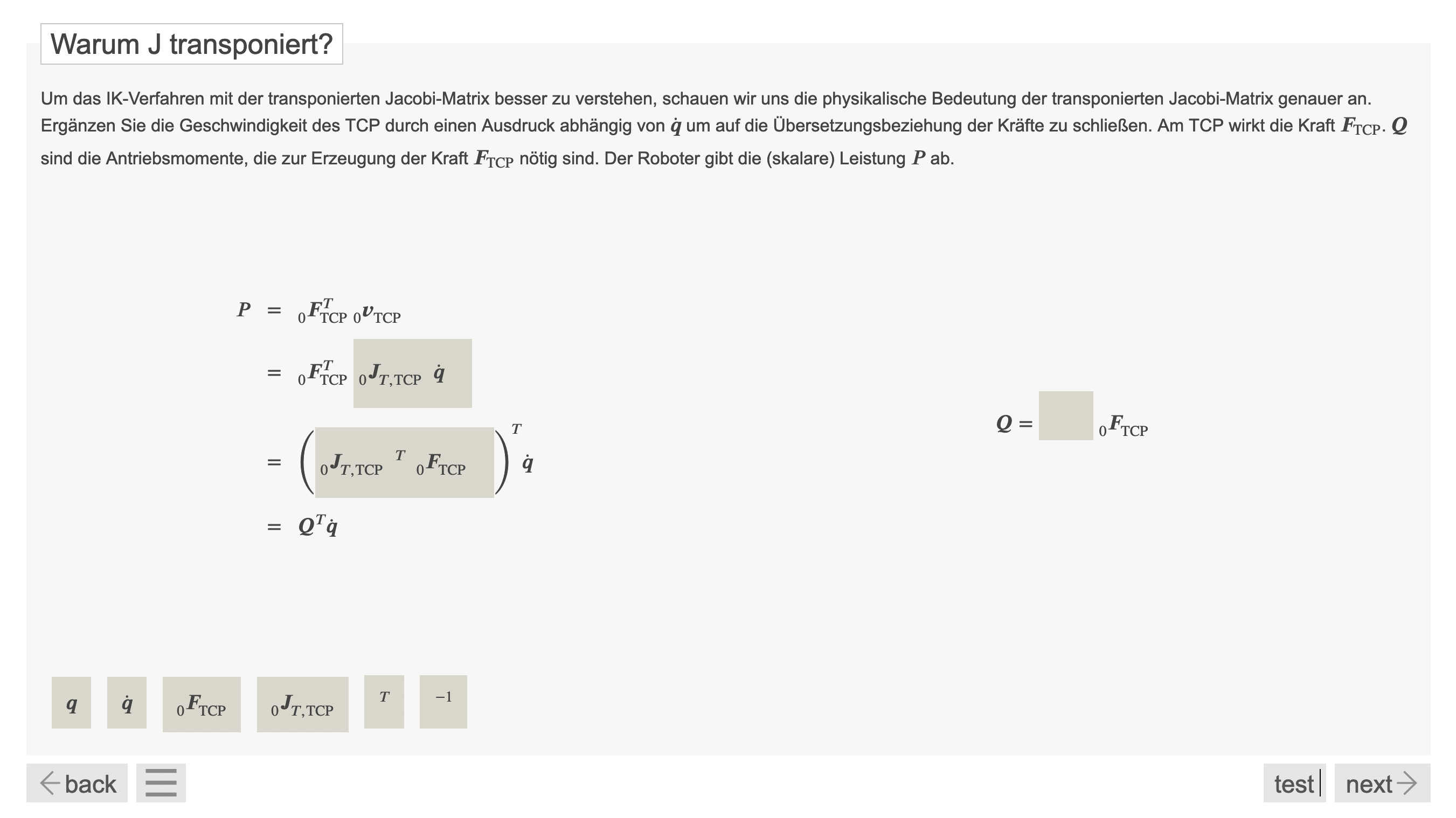
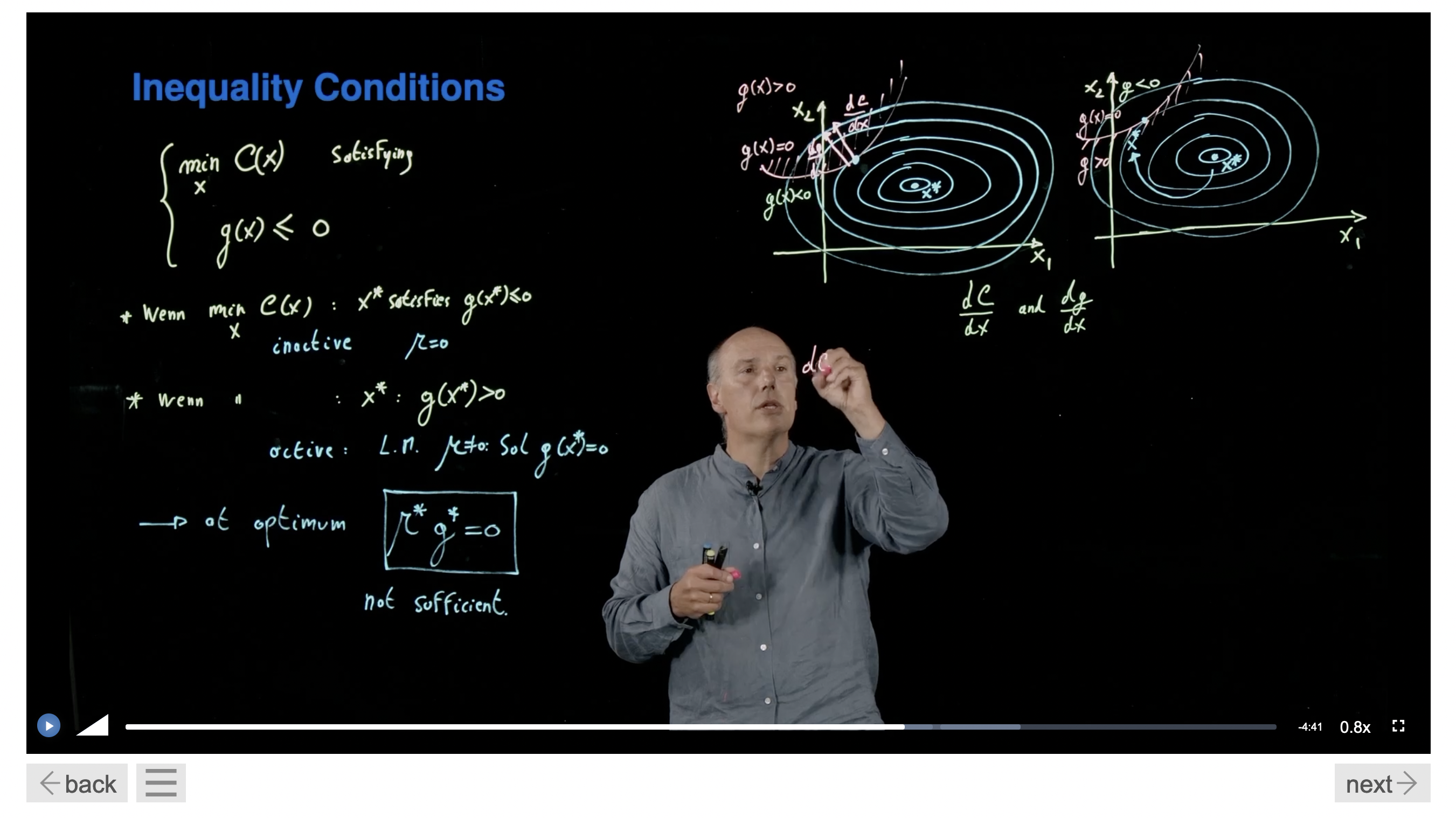
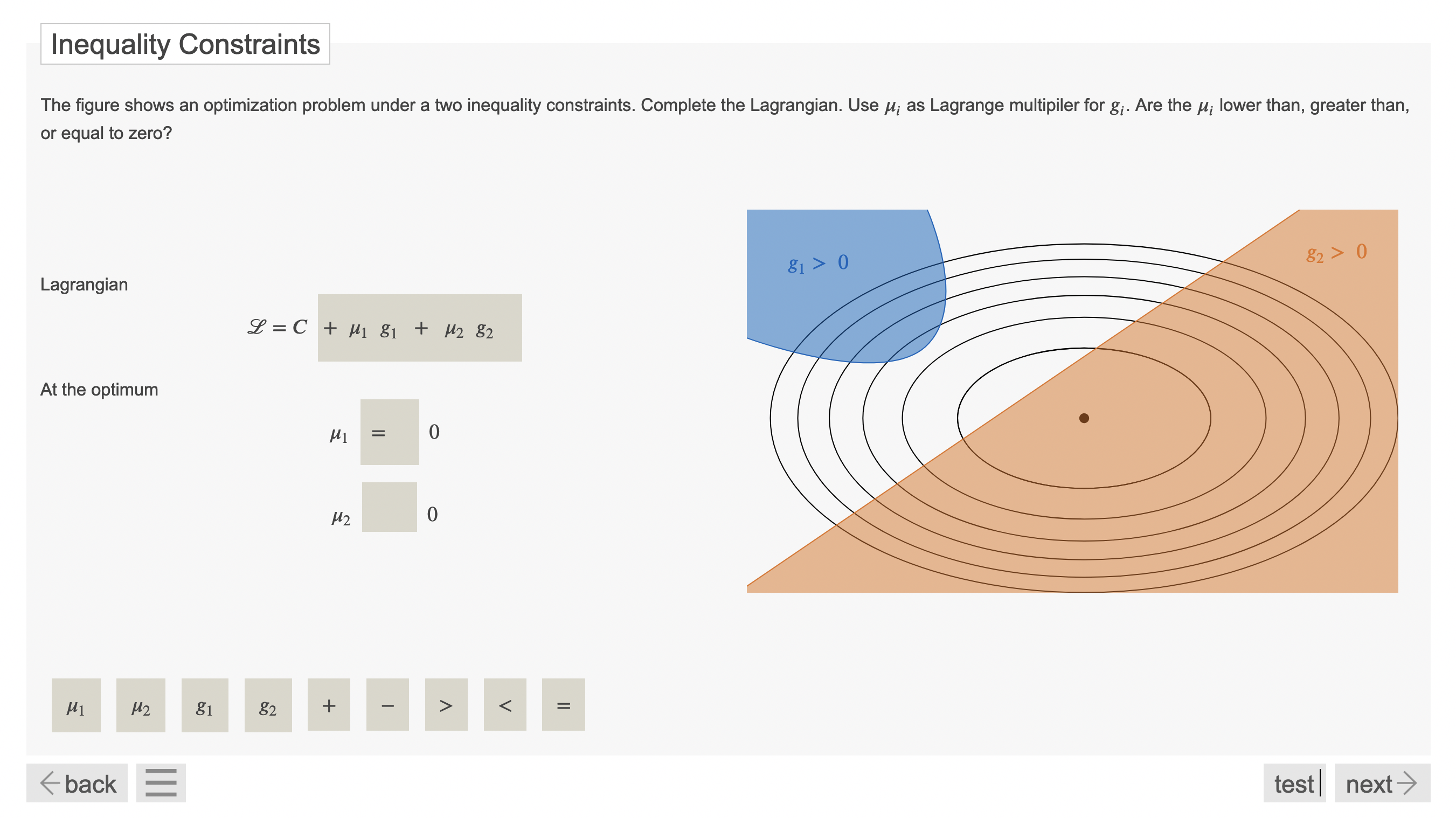
This project creates opportunities to combine digital teaching and on-site support with the greatest possible added value. New content is taught on this specially developed learning platform with the help of a continuous sequence of short videos that introduce new content in just a few minutes, accompanied by interactive tasks – a learning flow. The unusually high frequency of switching between new content and its application eliminates long passive phases, which helps to increase concentration. Since an active application phase always follows directly after the presentation of new content, this ensures that learners think through and anchor all content, thereby reaching higher levels of taxonomy. The time saved by teachers allows for more intensive face-to-face support. Here, discussions in small groups and one-on-one conversations are intended to support learners individually. The learning platform is designed to be simple so as not to distract from the content, supports the Learningflow teaching method, and offers an interactive task type in which learners can construct mathematical expressions from elements themselves. The project was funded by central study grants from TUM as part of the ideas competition Academic Enrichment of the Excellence Strategy.
Three Goals for Tomorrow's Teaching
Room for Improvement aims to achieve the following three goals in teaching:
- Teachers' time provides the greatest possible added value for student learning.
- Students are guided from new knowledge to application to reflection.
- Students can learn in a space that offers particularly good conditions for them.
Problems
Year after year, teachers hold almost the same courses. For lectures and central exercises, frontal teaching is the dominant form of instruction. Here, the lecturer is active, presenting content, and the student, predominantly passive, tries to absorb the content. Often, the central exercise on the same topic comes too late to reinforce the content from the lecture, as students can no longer remember the content accurately, partly because of the long interval between the two. Newer approaches attempt to get students actively involved in the lecture so that they can achieve higher levels of taxonomy. However, the live voting systems used for this purpose take up a lot of lecture time. In addition, each student needs a different amount of time to cope with the live voting question. To put it bluntly, even in the best-case scenario, the speed of the actual lecture is wrong for all students: too fast for some, too slow for others. Or, almost equivalently, too difficult for some, too easy for others. But it is precisely the right level of difficulty, the achievable challenges, that is of great importance for the motivation of the individual student. Another problem is the overlap of attendance dates. The reason for this, especially in Garching, is that there are no uniform time slots for events and students can choose modules across faculties.
Possible solutions
Digital Room for Improvement
In order to eliminate the problems described above and develop teaching in line with the goals listed above, an interactive online course can be created in RfI based on our model of activating teaching and active learning. Unlike the traditional format—with a 1.5-hour lecture and 45-minute exercise—the learning flow presents a short task on the relevant topic after a few minutes of video with new content. This significantly higher frequency of switching between new content and application allows learners to advance more quickly to higher levels of taxonomy. They apply the content, think it through, and check for themselves whether they have really understood the new content. If the task still presents too great a hurdle for the learner, they can watch the last video again. The frequency of change adapts to the topics, so that a small subtopic is self-contained in a content video. The frequent switching between information and processing should take place in a learning flow without technical breaks.
The new concept represents a step toward our mission statement of individuality for successful teaching and learning processes: The online course can be completed at any time, so there are no scheduling conflicts. Each learner can work through the course at their own pace, take their time with the assignments, pause the videos or watch them at a faster speed, and consult the script or books as needed. The concept is particularly suitable for students with different levels of prior knowledge, as it brings everyone up to the same level at the beginning of the course. Introductory chapters that repeat prerequisite content can be expanded, as any student who has already mastered the prerequisite content can skip these chapters or work through them at their own pace, depending on their level.
Real Room for Improvement
Discussions with students who attended lectures despite high-quality teaching materials such as lecture notes, assignments with detailed solutions, and recordings of lectures and central exercises reveal the following three qualities of face-to-face teaching compared to virtual teaching:
- Face-to-face classes lead to a structured weekly and daily routine, which, among other things, is also helpful for motivation.
- Social interaction with fellow students contributes to motivation and progress in terms of content.
- The personal relationship with the instructors promotes motivation and encourages students to ask more questions when things are unclear.
In the Room for Improvement, there is no front or back, as would be necessary in a traditional classroom setting. Different workstations offer learners a choice. In addition to workstations for self-study, group tables and blackboards invite discussion.